Grocery Shopping With Kids: Calm Checklist & Quick Games
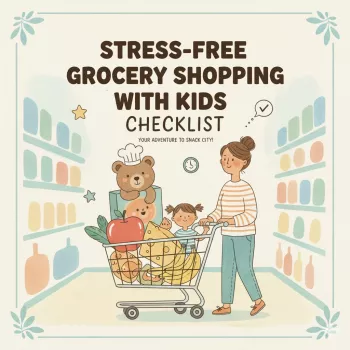
Stress-Free Grocery Shopping with Kids: A Simple Checklist and Calm-Kid Game Plan
Grocery runs with kids can feel like a race against hunger, boredom, and overstimulation. A small amount of prep plus a predictable routine can turn trips into something manageable—and sometimes even pleasant. Below is a practical checklist, age-based strategies, and quick fixes for common flashpoints so the store doesn’t derail the day.
Set the trip up for success before leaving the house
The easiest wins happen before you even park the car. When kids know what to expect—and their bodies aren’t running on empty—there’s less to fight against.
- Pick the timing: aim for after a snack/meal and before nap or quiet time ends; avoid the “hungry + tired” window when possible.
- Keep the trip small on tough days: choose a “top 10 essentials” run instead of a full restock when bandwidth is low.
- Bring a mini kit: wipes, a small snack, water, a comfort item, a pen, and a tiny toy or fidget reserved for store-only use.
- Review the plan in one sentence: “We’re getting five things, staying close, and then we’ll head home.”
- Assign jobs ahead of time: who holds the list, who finds colors/shapes, who helps scan items (if you use self-checkout).
Pre-Trip Checklist (Print or Screenshot)
| Step | What to do | Why it helps |
|---|---|---|
| Fuel | Snack + water before entering | Reduces impulse requests and irritability |
| Plan | Short list + store route (produce → dairy → pantry) | Cuts decision fatigue and wandering |
| Rules | 2–3 simple rules stated once | Creates predictability and fewer power struggles |
| Tools | Wipes, small toy, comfort item, pen | Prevents small problems from escalating |
| Roles | Give each child one job | Builds buy-in and keeps hands busy |
If you want a ready-made option you can keep on your phone, try the Stress-Free Grocery Shopping with Kids Checklist (digital guide). Having the same steps every trip helps kids “learn the script” faster.
A calm routine inside the store
Inside the store, your goal is momentum: steady movement, simple choices, and clear “what’s next” cues. Predictability lowers stress—for kids and adults.
- Start with connection: a quick hug, high five, or “I’m glad you’re helping today” sets a cooperative tone.
- Use a predictable order: walking the same route each time helps kids feel oriented and reduces wandering.
- Keep kids close in a positive way: let them hold the cart, push a mini cart (if available), or carry one safe item.
- Offer controlled choices: “Do you want to pick bananas or apples?” instead of “What do you want?”
- Use a visual finish line: “After we get milk and bread, we check out.” Count remaining items out loud.
When kids are regulated, they’re more capable of following rules and flexing with changes. Consistent, calm limits align with evidence-based parenting guidance from the American Academy of Pediatrics and the CDC’s positive parenting resources.
Age-by-age strategies that actually work
Kids don’t “behave” the same way at every age—because their brains and bodies aren’t the same. Match the plan to the stage.
Quick Jobs by Age
| Age | Job ideas | Script to use |
|---|---|---|
| 1–3 | Put two items in cart, hold the list, choose between two options | “You can pick A or B.” |
| 3–5 | Color hunt, count items, find shapes/letters on labels | “Find something green for us.” |
| 6–9 | Compare prices, pick best-looking produce, cross off list | “Which one is the better deal?” |
| 10–12 | Locate aisles, check ingredients/allergens, track total in cart | “Help keep us on budget.” |
For a simple “store-only” comfort item that can help with transitions (cart to checkout, checkout to car), consider bringing a small plush your child associates with calm. The Cute Mushroom Plush Toy is an easy option to reserve for errands so it stays novel.
Handling common flashpoints without escalating
Fast Fixes for the Most Common Moments
| Moment | What to do in 10 seconds | What to avoid |
|---|---|---|
| Impulse item request | Repeat the policy + redirect to their job | Debating or negotiating item-by-item |
| Overstimulation | Step aside to a quieter endcap + deep breaths | Pushing through while emotions rise |
| Touching everything | Give a “hands job” (carry one item) | Repeated scolding without a replacement behavior |
| Checkout impatience | Snack/water + a concrete job | Using screens as the only tool every time |
If you’re already stressed, your body is more likely to react quickly. Even one slow breath before you respond can help you stay steady—an approach that aligns with stress-management basics from the American Psychological Association.
Make the checklist do the work (print, save, reuse)
A ready-to-use digital checklist for calmer trips
For a simple, repeatable structure, the Stress-Free Grocery Shopping with Kids Checklist | Digital Parenting Guide can be saved on your phone so you’re not reinventing the plan every time you shop.
FAQ
How can a toddler behave in the grocery store without a meltdown?
Keep the trip short, feed them first, give one simple job, and offer two controlled choices. Step aside early when overstimulation starts, and repeat one calm phrase instead of negotiating.
What should kids do while grocery shopping so they don’t get bored?
Assign age-appropriate jobs like counting items, finding colors, crossing off the list, or comparing prices. Rotate quick games (scavenger hunt, “I Spy”) that connect directly to what you’re buying.
How do you handle constant requests for snacks and toys in the store?
Set a clear policy before you enter (none today, one planned treat, or one under a price limit), repeat it once, and redirect them to their job. Avoid debating each item, which teaches kids to keep asking.









Leave a comment